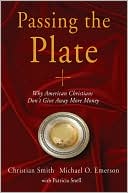
Passing the Plate: Why American Christians Don't Give Away More Money
Smith, Christian
Emerson, Michael O
Snell, Patricia
passing The Plate Shows That Few American Christians Donate Generously To Religious And Charitable Causes — A Parsimony That Seriously Undermines The Work Of Churches And Ministries. Far From The 10 Percent Of One's Income That Tithing Requires, American Christians' Financial Giving Typically Amounts, By Some Measures, To Less Than One Percent Of Annual Earnings. And A Startling One Out Of Five Self-identified Christians Gives Nothing At All.
this Eye-opening Book Explores The Reasons Behind Such Ungenerous Giving, The Potential World-changing Benefits Of Greater Financial Giving, And What Can Be Done To Improve Matters. If American Christians Gave More Generously, Say The Authors, Any Number Of Worthy Projects — From The Prevention And Treatment Of Hiv/aids To The Promotion Of Inter-religious Understanding To The Upgrading Of World Missions — Could Be Funded At Astounding Levels. Analyzing A Wide Range Of Social Surveys And Government And Denominational Statistical Datasets And Drawing On In-depth Interviews With Christian Pastors And Church Members In Seven Different States, The Book Identifies A Crucial Set Of Factors That Appear To Depress Religious Financial Support — Among Them The Powerful Allure Of A Mass-consumerist Culture And Its Impact On Americans' Priorities, Parishioners' Suspicions Of Waste And Abuse By Nonprofit Administrators, Clergy's Hesitations To Boldly Ask For Money, And The Lack Of Structure And Routine In The Way Most American Christians Give Away Money. In Their Conclusion, The Authors Suggest Practical Steps That Clergy And Lay Leaders Might Take To Counteract These Tendencies And Better Educate Their Congregations About The Transformative Effects Of Generous Giving.
by Illuminating The Social And Psychological Forces That Shape Charitable Giving, passing The Plate Is Sure To Spark A Much-needed Debate On A Critical Issue That Is Of Much Interest To Church-goers, Religious Leaders, Philanthropists, And Social Scientists.
publishers Weekly
why Is It That Christians In The World's Most Affluent Nation Give So Little Of Their Income To Charity? This Sociological Study, Based On Extensive Survey Data And Building On Prior Studies Of Christian Philanthropy, Shows That American Christian Groups Typically Give Away Only 1.5% To 2% Of Their Income. Considering That This Figure Is Based On Self-reporting, The Reality Is Probably Even Less. Catholics Are The Worst, With Many Protestant Groups In The Middle And Mormons (whom This Study Regards As Non-christian Religious Believers) At The Top. The First Two Chapters Lay Out The Problem Of Americans' Ungenerous Behavior, While The Third Ventures Explanations: It's Not That Americans Don't Have The Money, But That They Spend It On Luxuries And Fail To Perceive Needs Outside Their Own Circles; Also, Churches Are Vague About Expectations For Giving. A Fourth Chapter Delves Into Parishioners' And Pastors' Complex Feelings About Giving, While A Stirring Conclusion Lays Down The Gauntlet For Change. Although The Primary Audience Will Be Academic, Any Pastor Who Has Ever Had To Preach A Stewardship Sermon Should Also Read This Book. (oct.)
copyright © Reed Business Information, A Division Of Reed Elsevier Inc. All Rights Reserved.| Name in long format: | Passing the Plate: Why American Christians Don't Give Away More Money |
|---|---|
| ISBN-10: | 0195337115 |
| ISBN-13: | 9780195337112 |
| Book pages: | 288 |
| Book language: | en |
| Edition: | New Edition |
| Binding: | Hardcover |
| Publisher: | Oxford University Press |
| Dimensions: | Height: 6.3 Inches, Length: 9.3 Inches, Weight: 1.22577017672 Pounds, Width: 1 Inches |